An air conditioner can blow air while doing very little cooling. The indoor fan only moves air; the refrigeration circuit must also move heat out of the building. At the center of that circuit is the HVAC compressor: the component that draws in low-pressure refrigerant vapor and delivers it at a higher pressure and temperature.
That makes the compressor essential to conventional air conditioning and heat-pump operation, but poor cooling does not automatically mean it has failed. Airflow, electrical controls and refrigerant conditions can stop a healthy compressor from doing its job. Understanding what it actually does helps explain both the different compressor designs and the evidence needed before replacing one.
How an HVAC Compressor Moves Heat
Refrigerant carries heat through a sealed circuit. In cooling mode, it absorbs heat as it evaporates in the indoor coil. The compressor draws this vapor away, helping maintain the low-pressure conditions in which evaporation occurs, then raises its pressure before sending it to the outdoor coil. At the higher pressure, the refrigerant can condense at a temperature above the outdoor air, allowing heat to leave the system.
The condenser releases the heat absorbed indoors along with the energy added during compression. Refrigerant then leaves as a high-pressure liquid and passes through a metering device, which restricts flow and lowers the pressure. Some liquid flashes into vapor; the remaining liquid evaporates as the mixture absorbs heat in the evaporator. The compressor sustains circulation and the pressure difference between these two sides of the circuit.
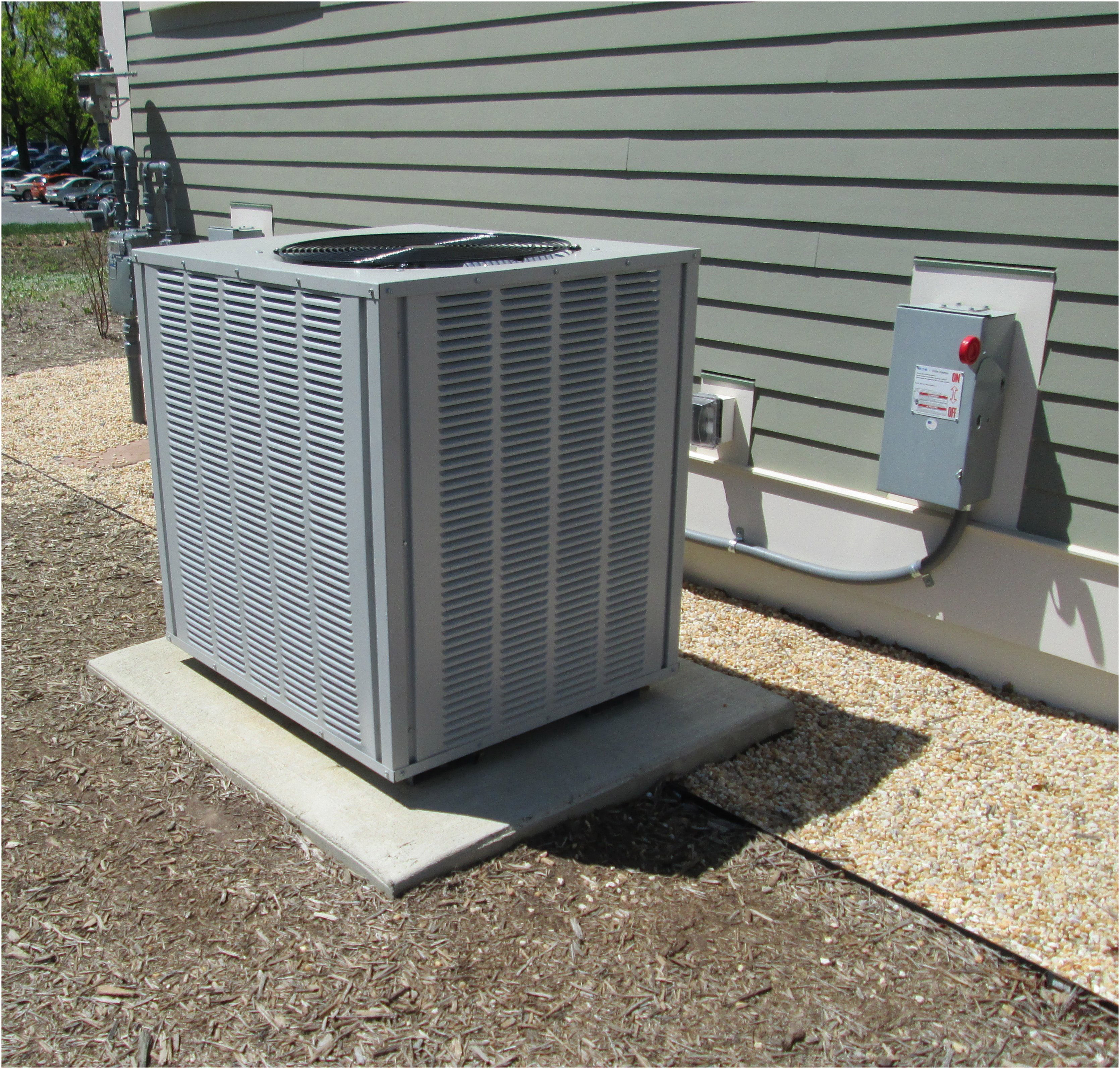
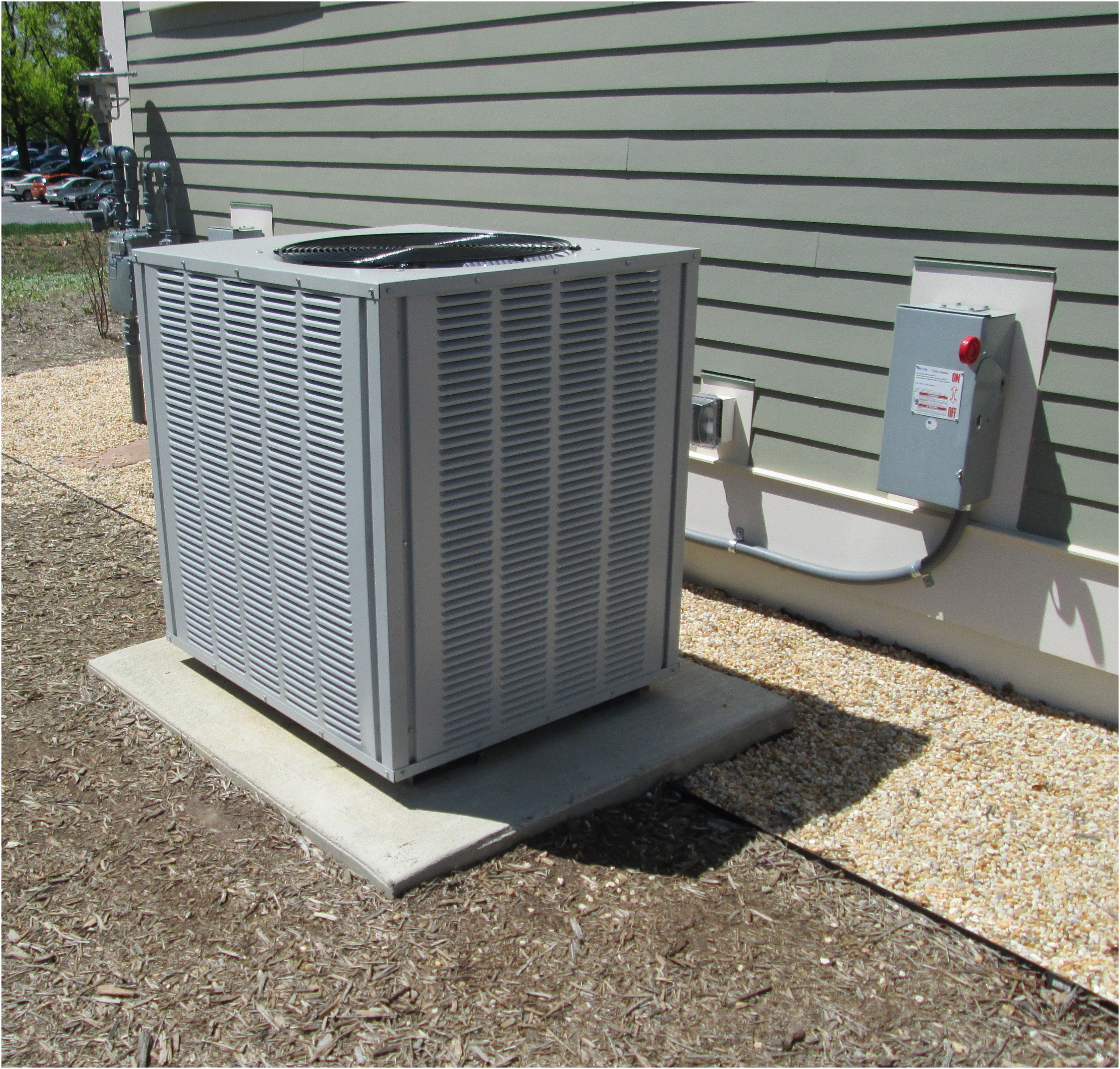
In a typical split air conditioner, the compressor sits inside the outdoor cabinet, alongside the fan, heat exchanger and electrical components. The entire cabinet is often casually called “the compressor,” although the compressor is only one part of it. Packaged rooftop equipment and chillers put these components in different arrangements.
A heat pump uses the same principle in heating mode. A reversing valve changes the refrigerant routing so the indoor coil releases heat and the outdoor coil absorbs it. The compressor still draws vapor into its suction connection and delivers it through its discharge connection; it does not need to reverse its rotation to reverse the heating and cooling functions.
The normal suction flow should be vapor. Liquid returning unintentionally can dilute lubricating oil or damage the compression mechanism. This is why airflow, refrigerant charge and metering control affect compressor reliability, even though they may appear to be separate service issues.
Compressor Types: Mechanism, Capacity Control and Construction
Names such as scroll, inverter and hermetic describe different features. Scroll identifies the compression mechanism, inverter-driven describes motor control, and hermetic describes how the motor and compressor are enclosed. A single compressor can be all three.
| Mechanical type | How it raises pressure | Typical applications |
|---|---|---|
| Reciprocating | Pistons move in cylinders, drawing in vapor and compressing it before discharge through valves. | Refrigeration equipment and some air conditioners, across a broad range of capacities. |
| Scroll | One spiral orbits another, trapping vapor in pockets that become smaller as they move inward. | Central air conditioners, heat pumps, rooftop units and many chillers. |
| Rotary | A rolling piston or vane arrangement reduces the volume of trapped vapor inside a compact chamber. | Room air conditioners, ductless systems and other compact equipment. |
| Screw | Helical rotors trap and compress vapor as it travels along the rotor assembly. | Commercial chillers and larger refrigeration installations. |
| Centrifugal | An impeller accelerates vapor; a diffuser converts part of that velocity into pressure. | Large building and process-cooling chillers. |
These application ranges overlap. Centrifugal compression also differs fundamentally from the other mechanisms: it develops pressure through refrigerant velocity rather than by squeezing a trapped pocket into a smaller volume. Carrier includes all five families in its compressor fundamentals training.
Capacity control is a separate choice. A single-stage compressor runs at one nominal output and cycles off when demand is satisfied. A two-stage design provides two capacity levels. A variable-speed compressor uses an electronic drive to adjust motor speed within its approved range, allowing output to follow demand more closely. Variable speed can reduce repeated starts and improve part-load comfort and efficiency, but it is not a sixth mechanical compressor type or a guarantee of better performance in every installation.
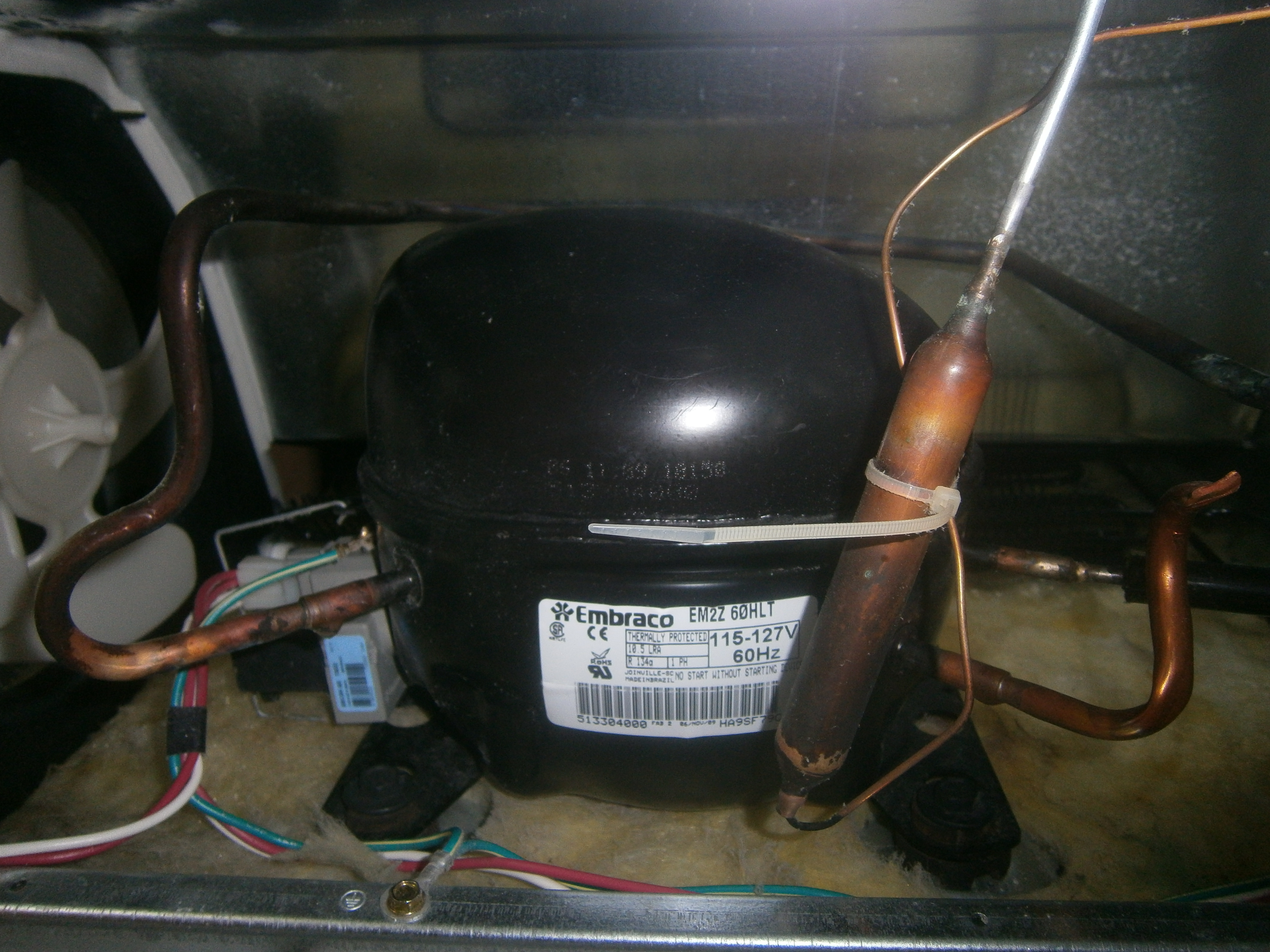
Construction matters when repair is considered. In a welded hermetic compressor, the motor and compression mechanism are sealed inside a shell; internal failure normally leads to replacement of the assembly. A semi-hermetic compressor has a bolted housing that permits specified service work. Neither label determines whether the mechanism is reciprocating, scroll or screw, and a failed external electrical component does not necessarily require opening or replacing the compressor.
Failure Signs: What They Tell You—and What They Do Not
The useful question is whether the compressor is receiving the correct electrical supply and control command, and whether it can move refrigerant under the required operating conditions. Noise, poor cooling and shutdowns are clues to that question. None is a reliable diagnosis on its own.
| Observed symptom | Possible explanations | What a technician needs to establish |
|---|---|---|
| Outdoor fan runs, but cooling is absent | The compressor may be stopped by a control, power or starting-circuit fault. It may also be running with a refrigerant or mechanical problem. | Whether the compressor is commanded on, actually running and producing the expected pressure difference. |
| Humming, clicking or an unsuccessful start | A motor may fail to accelerate because of low voltage, a faulty capacitor or relay where fitted, or an internal mechanical fault. | Supply voltage during the attempt, the specified starting components, current and motor condition. |
| Repeated starts and shutdowns | A thermostat, pressure control, drive or thermal protector may be stopping operation. | Which control ends the cycle and what condition triggers it. |
| Compressor runs, but output is weak | Low airflow, incorrect charge, a restriction or internal loss of pumping capacity can produce similar complaints. | Airflow, operating mode, pressures, temperatures and commanded capacity under known conditions. |
| New harsh noise or excessive vibration | Loose panels, mounts or contacting pipes may be responsible; liquid entry or internal damage is also possible. | The actual source of the noise and whether refrigerant and electrical conditions are abnormal. |
For example, a compressor that starts and then stops may be responding correctly to a protective control. A dirty condenser or failed condenser fan can prevent adequate heat rejection and trigger a high-pressure shutdown. Replacing the compressor would leave the cause in place. Copeland’s Starts/Runs troubleshooting guide separates voltage, starting-component, control and application faults from faults that justify compressor replacement.
The electrical design also changes the checks. Some fixed-speed single-phase compressors use run capacitors and may have an additional start capacitor and relay. Inverter-driven compressors rely on their drive electronics and require the equipment maker’s diagnostic procedure. A replacement capacitor or generic hard-start kit is therefore not a universal answer to a compressor that will not start.
There is no universal “good compressor pressure” or current reading. Useful measurements need the refrigerant identity, model, operating mode, indoor and outdoor conditions, and compressor speed or stage. A pressure reading taken while the unit is off cannot, by itself, show whether the compressor can pump. Likewise, an apparent open motor circuit needs to be distinguished from an open thermal protector before an internal winding failure is concluded.
What to Do Before Replacing a Compressor
For an owner or building operator, the first useful checks are accessible ones: confirm the thermostat setting, inspect the air filter, check that air inlets and outlets are unobstructed, and record when the symptom occurs. Note whether cooling is completely absent or merely weak, whether the equipment starts at all, and any displayed fault code. If the unit repeatedly trips a breaker, struggles to start or develops severe mechanical noise, stop requesting operation and arrange service rather than repeatedly resetting it.
Electrical testing, access to compressor terminals and work on the refrigerant circuit belong with a qualified technician. Capacitors and drive electronics can retain hazardous charge after power is removed. A useful service report should identify the failed part, include the measurements that support that conclusion, and explain why alternative causes were ruled out. “The fan runs but it is not cold” describes the complaint; it does not identify the failed component.
When internal failure is confirmed, the next question is what caused it. Liquid floodback occurs while the compressor is running; a flooded start follows refrigerant migration and condensation during an off period. Both can compromise lubrication. Persistent overheating, inadequate oil return, contamination and electrical faults can also damage the compressor. Copeland distinguishes these mechanisms in its compressor failure training notes. Correcting the cause is part of a lasting repair.
A replacement must match the equipment’s approved refrigerant, lubricant, electrical supply, capacity requirements and operating range. A similar shell, matching pipe connections or the same nominal horsepower is insufficient. Compressor replacement is more attractive when the rest of the system is sound and warranty coverage reduces the repair cost. A complete equipment replacement deserves closer comparison when coils and controls also need major work, compatible parts are difficult to obtain, or the total repair quote approaches the cost of a suitable replacement system. Compare complete installed scopes, including refrigerant work, commissioning and warranty terms.
The compressor makes heat transfer possible by maintaining refrigerant flow and the required pressure difference. Its surroundings determine whether it can do that reliably. When the fan is running but the room is not cooling, the right next step is to establish which part of that process has stopped working—and correct the cause before committing to a compressor replacement.