Company Name: ULO GROUP
Specialist Area: Terminal Blocks and Circular Connectors
Operating Type: Manufacturer
Employees: 300+
Established: 2010
Website: ulo-group.com
Email: sales@ulogroup.com
Phone: +86-172-8068-7869
WhatsApp: +86-172-8068-7869
Social Media:
Location: No. 48, Taiqing Road, Hairun Street, Sanmen County, Taizhou City, Zhejiang Province, China Google Maps









USE relay sockets connect URE relays with one or two changeover contacts. Choose screw or push-in terminals by model, with dedicated coil and contact connections and a retaining clip for the relay.
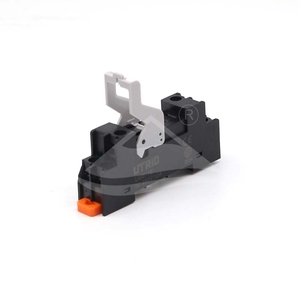
USL sockets connect URL relays with two or four changeover contacts. Choose the screw or push-in model for the relay layout, current rating, conductor size and required ambient temperature range.
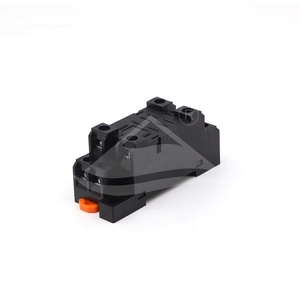
USM sockets provide screw or push-in connections for URM relays with two or four changeover contacts. Compare models by socket rating, conductor range, insulation level and ambient conditions.

USS sockets connect URS single-changeover relays through screw or push-in terminals. Select the socket input-voltage version and matching relay, with a 6.2mm body width and separate control wiring.

URS slim relays provide one changeover contact in a 5mm-thick body. Choose a 5V, 12V, 24V, 48V or 60VDC coil, then match the relay with its socket and the required resistive or motor load rating.
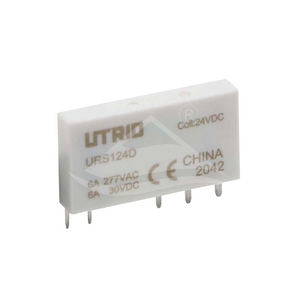
ETR modules connect servo drive I/O signals through 20-, 36- or 50-contact MDR interfaces. Select the contact count and footprint for the cable assembly, with 24VDC and 1A electrical ratings.
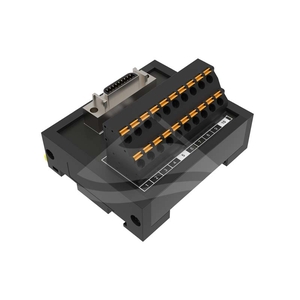
ETD modules connect D-sub cables to field wiring with 9, 15, 25, 37 or 50 contacts. Male and female versions share each size-specific footprint, with 24VDC ratings and terminals for 26-16AWG wire.
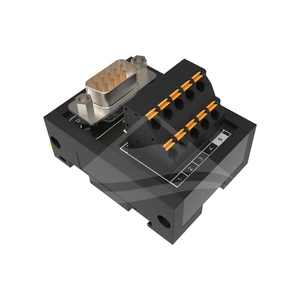
ETL interfaces connect 20-, 34- or 40-contact MIL cables to field terminals. Standard and K models use different terminal numbering layouts, with shared 24VDC and 1A ratings for signal wiring.

ETT modules split a 20- or 40-contact MIL inlet into smaller connector groups. Choose two 8-signal, four 8-signal or two 16-signal branches, with 24VDC and 1A ratings for the interface.

ETS-16L and ETS-32L provide terminal connections for 16 or 32 I/O signals. Both use a connector inlet, numbered field terminals and visible signal indicators, with 24VDC and 1A interface ratings.

ETC PF terminal modules connect Panasonic FP series PLC wiring to field terminals. Choose 8- or 16-signal layouts, with PFD versions adding visible indicators alongside the signal connections.
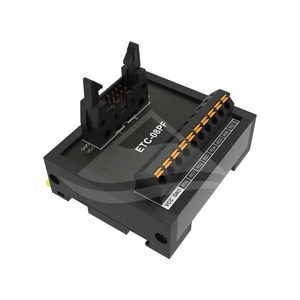
ETC-32K connects KEYENCE KV-1000, KV-3000 and KV-5000 CPU wiring through a 40-contact MIL interface. Numbered terminals, status indicators and four normally open relay outputs support connections.
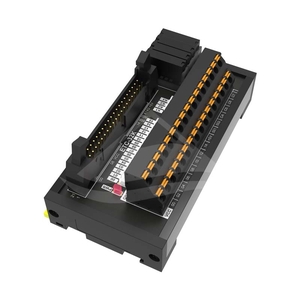
ETC-32MLN and ETC-32MLP connect Mitsubishi L series CPU signals to field terminals. Select the NPN or PNP version to match the CPU, with LED indication and a 40-contact MIL cable interface.

ETC-32MQ provides a terminal interface for Mitsubishi Q series wiring, with a connector inlet, numbered signal terminals and adjacent indicators. Electrical ratings are 24VDC and 1A.
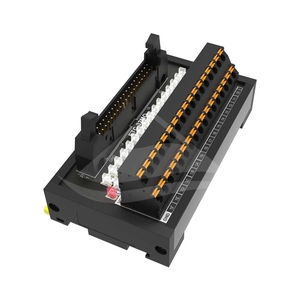
ETC-32RC brings Omron CPU wiring from a connector inlet to marked field terminals. The interface is rated at 24VDC and 1A, with a 26-16AWG wire range for the individual terminal connections.
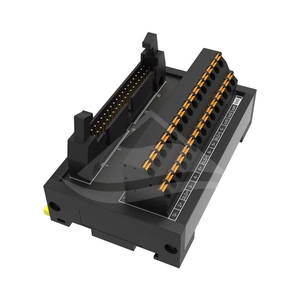
ETS three-wire terminal modules combine signal and supply connections in 8- or 16-position layouts. Choose connector or terminal-strip interfacing and the model suited to I/O or sensor input wiring.

GW MR gateways connect Modbus RTU devices to five industrial Ethernet networks, with one to three serial channels, RS232/RS485/RS422 interfaces, push-in terminals and a 24VDC power supply.

GW FP gateways link user-defined serial protocols to industrial Ethernet, offering one to three channels with RS232, RS485 and RS422 interfaces, master/slave modes and 24VDC power.
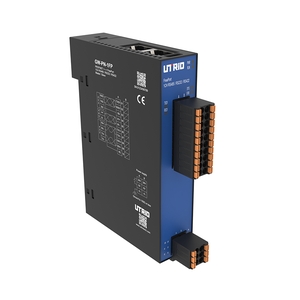
The UF20-DC-U-5 supplies 5V DC at up to 2A from a 24V DC input. Its 12mm-wide housing mounts on a 35mm DIN rail and uses push-in terminals for power wiring within UF20 I/O installations.
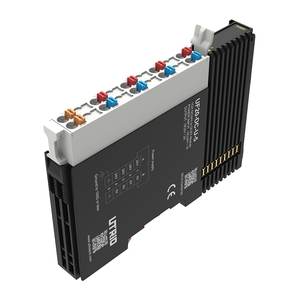
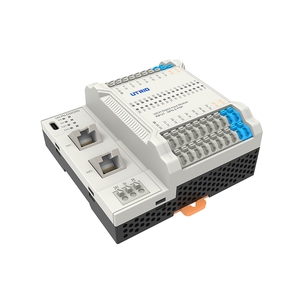
UF20 bus couplers connect up to 32 I/O modules to PROFINET, EtherCAT or Modbus TCP/IP networks. Each model has two RJ45 ports, push-in power terminals and a compact 24mm-wide DIN rail housing.
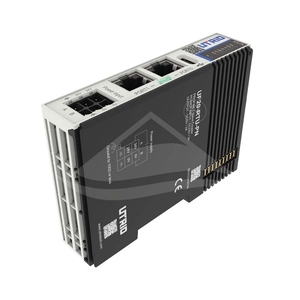
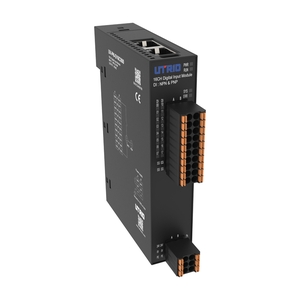
UF20 digital input modules accept NPN and PNP signals across 8, 16 or 32 channels. Choose push-in terminals or a 32-channel MIL connector version, with optical isolation and fault diagnosis.
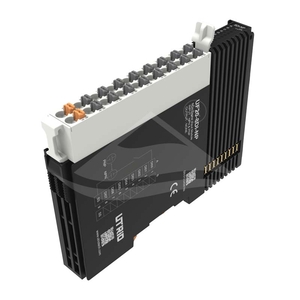
The UF20-8DO-R provides eight relay outputs with a one-byte interface, optocoupler and relay isolation, diagnostics and alarms. Its 24mm-wide housing uses push-in terminals and DIN rail mounting.

UF20 analog input modules offer 4 or 8 differential voltage or current channels with 16-bit resolution, magnetic isolation and diagnostics, using push-in wiring in a 12mm-wide DIN rail housing.
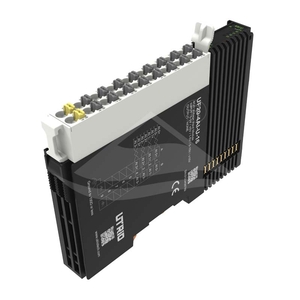
The UF20-4RTD measures four RTD inputs with 16-bit resolution and 0.1°C increments. It supports two-, three- and four-wire sensors, magnetic isolation, diagnostics and per-channel limit alarms.
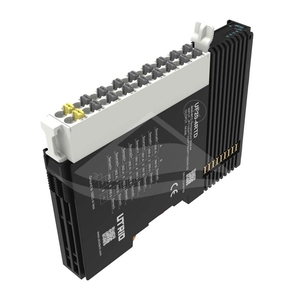
UF20 thermocouple modules provide 4 or 8 inputs with 16-bit resolution, cold junction compensation and magnetic isolation. They support nine sensor types, diagnostics and interference suppression.
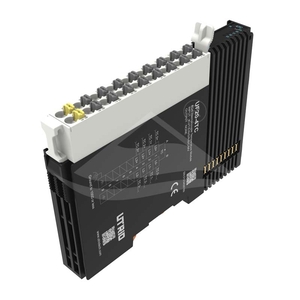
UE20 bus couplers connect up to 32 expansion modules through EtherCAT or PROFINET. Both use two RJ45 ports, spring terminals and integrated 5V system and 24V load distribution in a DIN rail housing.
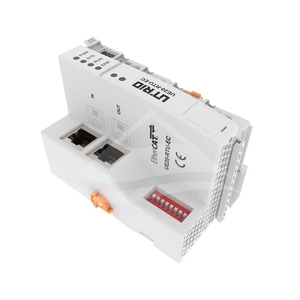
UE20 digital input modules offer 8 or 16 channels in NPN and PNP versions. They combine optocoupler isolation, reverse protection and diagnostics with spring terminals in a 12mm-wide housing.
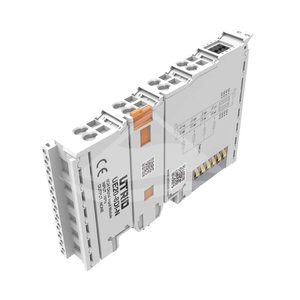
UE20 analog input modules offer 4 or 8 differential channels with 16-bit resolution. Choose voltage, current or a four-channel mixed-input model, with magnetic isolation and spring terminal wiring.
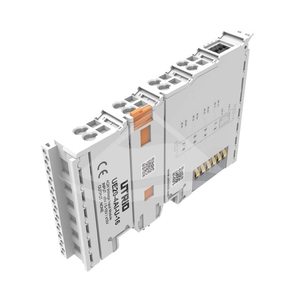
UE20 analog output modules provide 4 or 8 differential voltage or current channels with 16-bit resolution, magnetic isolation and fault diagnostics. Spring terminals simplify cabinet signal wiring.

The UE20-4RTD accepts four RTD inputs with 16-bit resolution and 0.1°C increments. Two-, three- and four-wire connections, magnetic isolation and channel alarms support temperature monitoring.
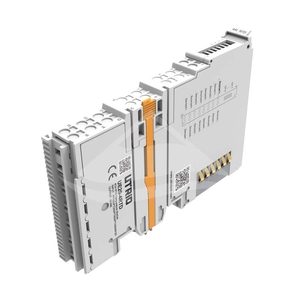
The UE20-4TC measures four thermocouple inputs with 16-bit resolution and 0.1°C increments. It combines cold junction compensation, magnetic isolation, diagnostics and spring terminal connections.
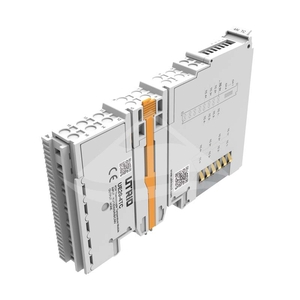
The UE20-DC-U-5 converts 24V DC to a 5V system supply up to 2A and distributes 24V load power up to 5A. Electrical isolation, reverse protection and spring terminals support I/O power wiring.
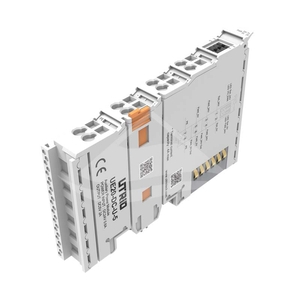
UE20 counter modules have two channels for 24V PNP, 24V NPN or differential encoder signals. Select by input type, count mode and cable length, with ×1, ×2 or ×4 multiplication and DIN rail mounting.
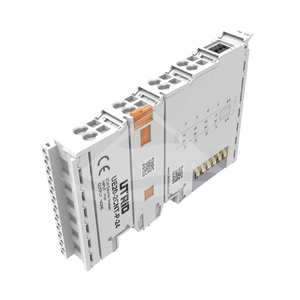
The UE20-1MCOM-485/232 adds one RS485 or RS232 channel to UE20 I/O. It operates as a Modbus RTU master, with selectable baud rates, synchronization messages and communication timeout detection.

The UE20-1FCOM-485/232 provides one RS485 or RS232 channel for free protocol communication. Set baud rate, parity, data and stop bits, master or slave operation, and receive framing for the device.

M12 field-wireable connectors offer male and female contacts, straight and angled bodies, and shielded or unshielded versions. Select the documented coding, pin count, termination and cable entry.

M8 field-wireable connectors combine male or female contacts with straight or angled bodies and shielding options. Select the contact count, coding and termination for the mating interface.

M8 sensor and actuator cables combine a straight or angled male or female connector with a free cable end. Select the pin count, PVC or PUR jacket, shielding and cable length for the installation.
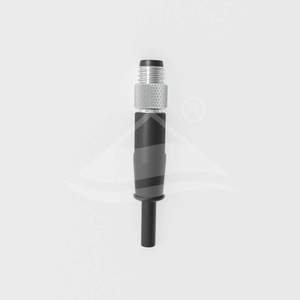
M5 sensor and actuator cables provide three or four A-coded contacts with straight or angled male and female connectors. Select PVC or PUR cable, shielding and length to suit the device connection.

M8 device receptacles offer male and female contacts with solder cups, wire leads or PCB pins. Compare front and rear mounting, shielded versions and contact ratings for compact sensor connections.
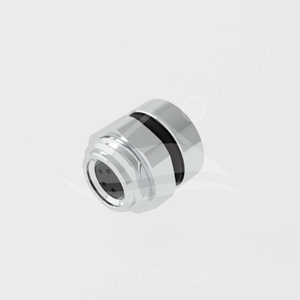
M12 device receptacles combine male or female contacts with panel threads or square flanges. Choose solder cups, wire leads or PCB pins, with separate coding, shielding and mounting specifications.
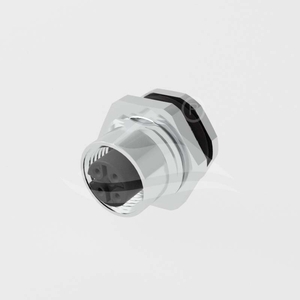
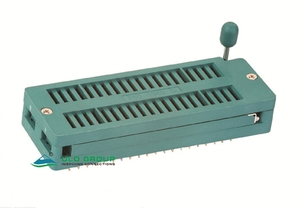
IC395 sockets use four-finger contacts and long square wire-wrap terminals, with PBT housings, tin-plated pins, optional gold contact clips and specified single- or dual-row configurations.
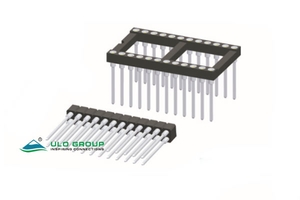
IC389 sockets offer machined receptacle contacts in through-hole and SMT forms, with 2.54mm or 1.778mm contact pitch, model-specific row spacing, glass-filled PBT bodies and selectable finishes.
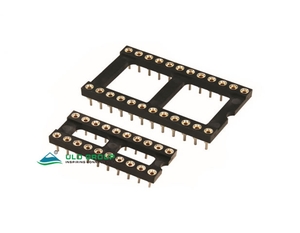
IC397 and IC398 sockets use stamped copper-alloy contacts with tin plating, offering 2.54mm or 1.778mm pitch, several row spacings and optional central supports in thermoplastic housings.
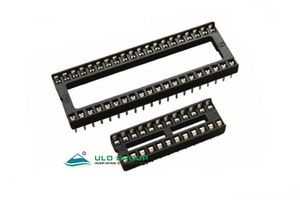
PL420 sockets accommodate PLCC packages with 1.27mm contact pitch, through-hole and SMT constructions, 20-84 contact options and separate body dimensions, PCB patterns and profile-height choices.
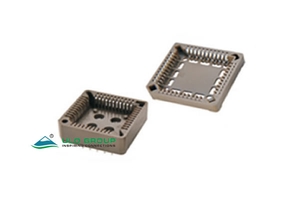
IC391 machined male headers combine 2.54mm and 1.778mm pitches with framed and strip layouts, through-hole and SMT terminations, defined row spacings and model-specific pin and plating options.
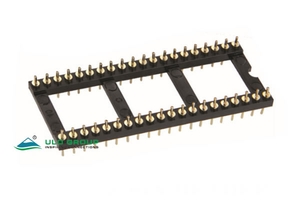
IC392 strip adapters cover 2.54mm and 2.0mm pitches in single and dual rows, with four straight-pin profiles, vertical, right-angle and SMT options, plus solder-cup terminals on IC392B.
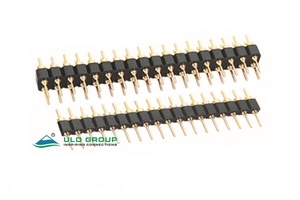
IC390 sockets offer 1.778mm, 2.0mm and 2.54mm pitches, single and dual rows, framed and strip bodies, multiple pin lengths and selected right-angle or SMT layouts with separate pin and clip finishes.
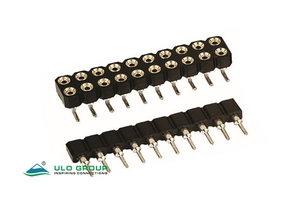
PH419 pin headers use a 1.27mm longitudinal pitch with single-row, dual-row and spacer designs, through-hole or SMT mounting, selectable housing heights and separate model-specific PCB layouts.
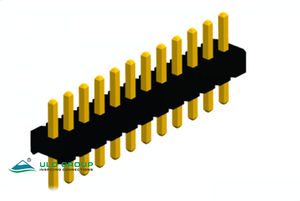
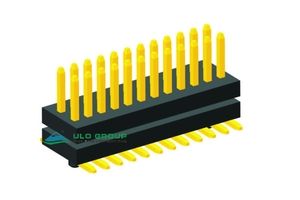
PH419ZC is a dual-row SMT spacer pin header with 0.8mm longitudinal pitch, 1.2mm row spacing, optional locating posts and pickup support, gold-flash contacts and tray, reel or tube packing.
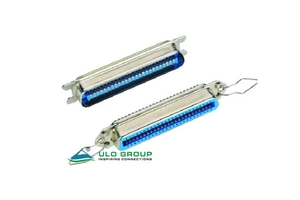
CC427 and CC467 Centronic PCB connectors offer straight male or female and right-angle female configurations, with model-specific contact counts, plating, housing colours and latch options.
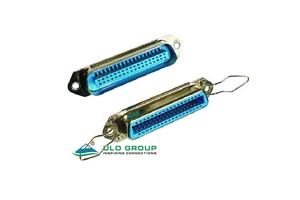
CC427A, CC466 and CC466A Centronic solder connectors provide male and female cable interfaces, with model-specific contact counts, latch or hood selections, gold plating and dimensional tables.
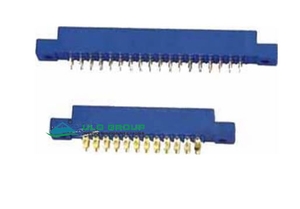
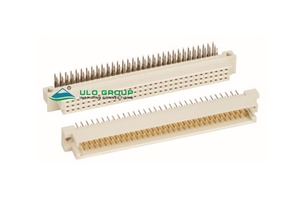
UD508 DIN 41612 R type connectors combine 2.54mm pitch with male and female interfaces, 96- or 48-position body sizes, selectable contact population, tin or gold-flash plating and PBT housings.
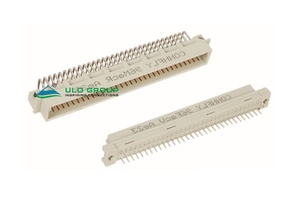
DIN 41612 C type connectors cover male and female interfaces, solder and press-fit terminations, selectable contact populations and a dedicated 78+2-contact female model with its own footprint.
PCB454 is a 2.0mm PH wire-to-board connector system with 2 to 15 positions, separate female housings and crimp terminals, plus vertical or right-angle male PCB headers with selectable tail forms.
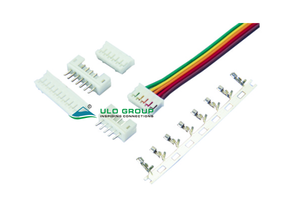
PCB455 SAN connector components use 2.0mm pitch and 2 to 15 positions, with separate female housings and crimp terminals for 30–24AWG wire, tin or gold-flash plating and a PCB mounting arrangement.
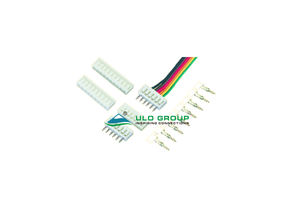
PCB455A SANW connectors have female housings and separate crimp contacts at 2.0mm pitch, with 2 to 15 positions, white or transparent housings, tin or gold-flash plating and contact drawings.
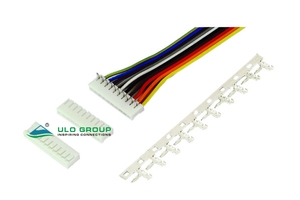
PCB456 SCN components pair 2.5mm-pitch female housings in 2 to 16 positions with separately selected A or B crimp terminals, supporting 28–22AWG wire and a 1.6mm PCB mounting reference.
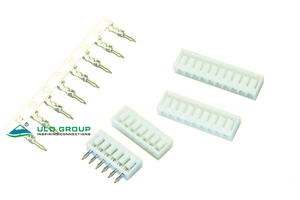
PCB456A SCNW components include 2.5mm-pitch female housings for 2 to 16 positions and separate crimp contacts, with white or transparent housings, tin or gold-flash plating and section drawings.

PCB456B SM cable connectors use 2.5mm pitch with 2 to 12 positions, separate male and female housings and crimp terminals, latch retention, three housing colours and tin or gold-flash finishes.
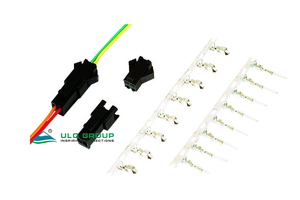
PCB457 XH components provide 2.5mm-pitch connections in 2 to 20 positions, with female housings, crimp terminals and male PCB headers in vertical or right-angle forms with optional kinked tails.
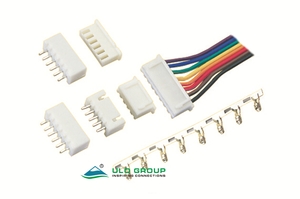
PCB457A EH connectors combine 2.5mm pitch, 2 to 20 positions, separate female housings and crimp terminals, and vertical or right-angle PCB headers with tin or full gold-flash contact options.
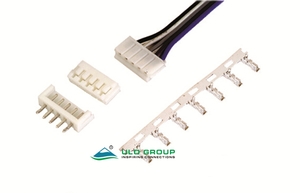
PCB457B EL cable connectors use 4.5mm pitch with 2, 3, 4 or 6 contacts, separate male and female housings and crimp terminals, and single-row or dual-row options for four-contact connections.
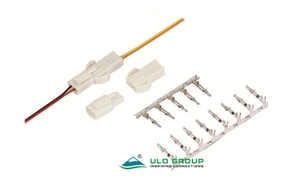
PCB457C ZH connectors provide 2.5mm pitch and 2 to 20 positions, with separate female housings and crimp terminals, vertical or right-angle PCB headers, and tin or full gold-flash contacts.
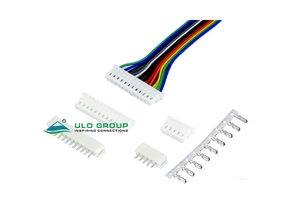
PCB458 2510 connectors use 2.54mm pitch and 2 to 20 positions, with separate female housings and crimp terminals, tin-plated vertical or right-angle PCB headers, and three housing colours.

TJC8 connector components include PCB459 at 2.54mm pitch and PCB459A at 2.0mm pitch, with single-row and dual-row female crimp housings, separate terminals, black insulation and two plating choices.
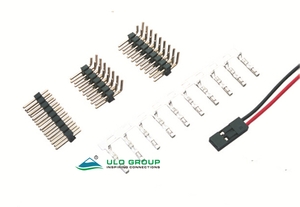
PCB460 connectors use 3.96mm pitch and 2 to 13 contacts, with separate female housings and crimp terminals, vertical or right-angle male PCB headers, transparent housings and two contact finishes.
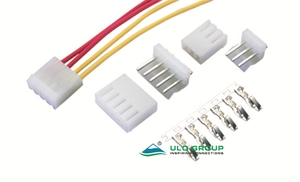
PCB461 VH connectors use 3.96mm pitch and 2 to 13 contacts, with separate female housings and crimp terminals, white insulation, vertical or right-angle PCB headers, and two plating choices.
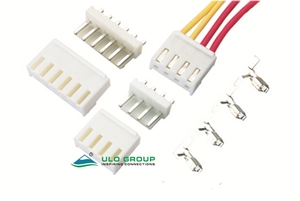
PCB461A male PCB headers use 4.2mm mating pitch with 4 to 20 contacts in two rows, offering vertical mounting or right-angle versions with mounting ears, locating posts, or neither feature.
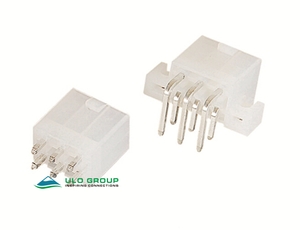
PCB461B cable connectors use 4.2mm pitch with two or three rows, separate male and female housings and crimp contacts, transparent insulation, and tin or full gold-flash contact finishes.
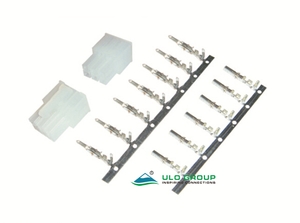
PCB462 connectors use 5.08mm pitch and 2 to 10 contacts, with separate female housings and crimp terminals, transparent insulation, vertical or right-angle PCB headers, and two plating choices.
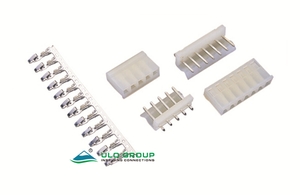
PCB463 TJC2A connectors offer 1 to 6 contacts, with a 7.5mm first spacing and 5.0mm following spacings on multipole versions, separate crimp components, white housings and vertical male headers.
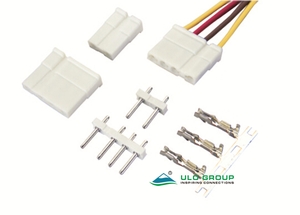
DB421 and MP421K solder-cup D-sub connectors cover 9, 15, 25, 37 and 50 contacts in male or female versions, with distinct contact finishes, screw hardware options and model-specific temperatures.
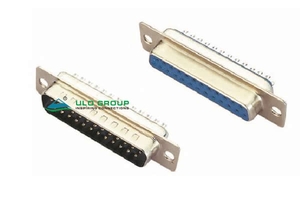
Mixed D-sub connectors combine 5A signal contacts with power contacts in 7W2, 17W2 and 13W3 layouts, with solder-cup, right-angle PCB and straight PCB versions plus male and female interfaces.
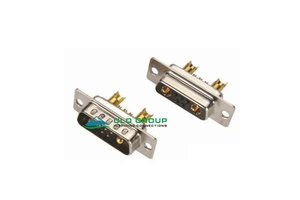
All-power D-sub connectors offer six contact layouts in solder-cup, right-angle PCB and straight PCB versions, with male or female interfaces and selectable 10A to 40A solder contacts.
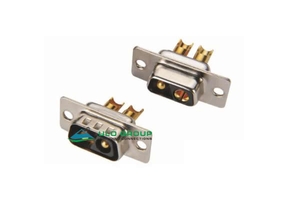
DB423 high-density D-sub solder connectors offer 15, 26, 44, 62 or 78 contacts with male and female interfaces, three insulator colours, plated steel shells and selectable screw hardware.
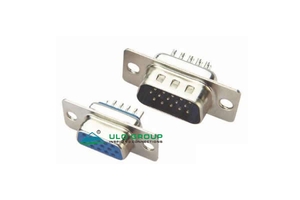
DB424 series D-sub IDC connectors offer 9, 15, 25 or 37 contacts with male or female interfaces, plus model-specific strain relief, latch, shielding-cover and threaded-rivet options.
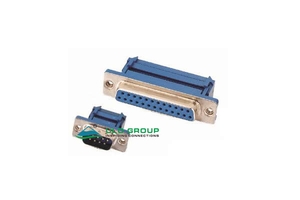
DB424A D-sub crimp connectors provide 9, 15, 25 or 37 positions with male or female contacts, blue or black insulators, selectable gold finishes and tin or nickel-front steel shells.
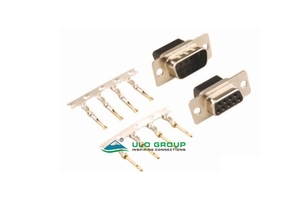
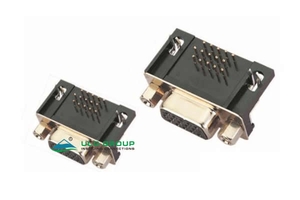
High-density D-sub PCB connectors include right-angle, slim and straight versions with model-specific contact counts, current ratings, boardlocks, screw hardware and plated contact options.
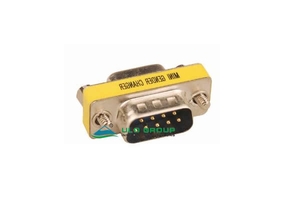
DB470B D-sub adapters offer 9, 15, 25 or 37 contacts in female-to-female, male-to-female and male-to-male configurations, with nickel-plated shells, gold-flash contacts and two screw styles.
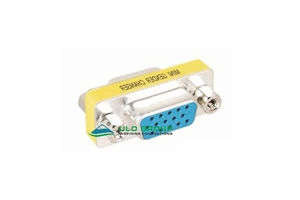
DB470C high-density D-sub adapters connect 15, 26, 44 or 62 contacts in three end-gender configurations, with gold-flash contacts, nickel-plated shells and selectable CC or DS screw hardware.
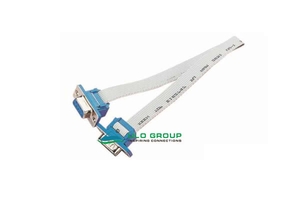
DB442 ribbon cable assemblies pair male and female D-sub connectors in three cable styles, with 9, 15, 25 or 37 contacts, six length options and selectable wire diameters and cable markings.